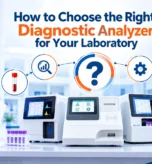

Blood testing is an important part of laboratory diagnostics. A complete blood count (CBC) helps healthcare professionals evaluate several components of blood, including red blood cells, white blood cells, hemoglobin, and platelets. A hematology analyzer automates the measurement of these components and helps laboratories process routine blood samples efficiently.
For hospitals, clinics, and diagnostic laboratories, selecting a suitable hematology analyzer involves understanding its technology, parameters, sample requirements, throughput, and data management capabilities.
1. What Is a Hematology Analyzer?
A hematology analyzer is a laboratory instrument designed to measure and report blood cell parameters from appropriate samples. Automated systems help standardize routine counting and measurement processes.
Depending on the model, a hematology analyzer may report parameters associated with red blood cells, white blood cells, hemoglobin, and platelets. Some systems also generate histograms or additional calculated parameters.
Hematology analyzers are commonly used in:
- Hospital laboratories.
- Independent diagnostic centres.
- Medical clinics with laboratory facilities.
- Healthcare institutions performing routine blood testing.
- Laboratory networks processing regular sample volumes.
The available parameters and intended applications depend on the analyzer’s configuration and validated specifications.
2. How Does a Hematology Analyzer Work?
Hematology analyzers use different measurement principles to analyze blood components. The exact process varies according to the instrument and its technology.
Electrical Impedance
Electrical impedance is used in many hematology analyzers to count and size certain blood cells. As cells pass through a measurement aperture, they produce changes in electrical resistance. The instrument processes these signals to estimate cell counts and sizes.
Hemoglobin Measurement
The analyzer measures hemoglobin using a method specified by the manufacturer. Some systems use cyanide-free methods, which avoid cyanide-containing reagents in the hemoglobin measurement process.
Data Processing
The analyzer processes measurement signals and calculates or reports supported parameters. Results may be displayed on a touchscreen, stored internally, printed, or transferred to a compatible laboratory information system.
Laboratory personnel must review results, instrument flags, quality-control status, and relevant clinical information according to established procedures.
3. Understanding the Important CBC Parameters
A CBC includes several measurements that help describe blood cell characteristics.
| Parameter | Meaning |
|---|---|
| WBC | White blood cell count |
| RBC | Red blood cell count |
| HGB | Hemoglobin concentration |
| HCT | Hematocrit |
| MCV | Mean corpuscular volume |
| MCH | Mean corpuscular hemoglobin |
| MCHC | Mean corpuscular hemoglobin concentration |
| RDW | Red blood cell distribution width |
| PLT | Platelet count |
| MPV | Mean platelet volume |
Some analyzers provide additional parameters, such as neutrophil, lymphocyte, and intermediate-cell counts or percentages. The exact differential classification depends on the analyzer’s capabilities.
These measurements provide laboratory information that clinicians interpret alongside symptoms, medical history, and other investigations. An analyzer result by itself does not establish a diagnosis.
4. Three-Parameter and Five-Parameter Differential Analysis
Hematology analyzers differ in their white blood cell differential capabilities.
A three-part differential typically groups white blood cells into three categories, while a five-part differential generally distinguishes neutrophils, lymphocytes, monocytes, eosinophils, and basophils.
| Feature | Three-Part Differential | Five-Part Differential |
|---|---|---|
| White Cell Classification | Three broad groups | Five major white cell types |
| Typical Use | Routine testing workflows | More detailed differential reporting |
| Data Output | Basic differential information | Expanded differential information |
| Equipment Selection | Depends on laboratory needs | Depends on clinical and testing requirements |
The appropriate choice depends on the laboratory’s test menu, clinical requirements, budget, and need for additional differential information.
5. Why Sample Volume Matters
Sample volume is an important consideration, particularly in facilities serving children, older patients, or individuals for whom sample collection may be challenging.
Some analyzers offer low-volume testing modes. For example, the KT-62 Fully Automatic Hematology Analyzer listed by ALSAT Diagnostics specifies a 9 μL sample volume for whole blood and capillary modes, with a separate 20 μL requirement for prediluted mode.
Before selecting an instrument, verify:
- Sample volume for each operating mode.
- Compatible sample tubes and collection methods.
- Anticoagulant requirements.
- Sample stability and preparation procedures.
- Minimum sample requirements for reliable operation.
Low sample volume should be considered alongside analytical performance, not as a replacement for it.
6. Throughput and Laboratory Productivity
Throughput describes the amount of testing an analyzer can process within a specified period. It helps laboratories assess whether equipment can handle routine and peak workloads.
A smaller clinic may prioritize compact equipment and straightforward operation. A high-volume laboratory may need greater throughput, additional sample capacity, automated loading, or multiple analyzers.
When evaluating throughput, consider:
- Average samples processed per day.
- Peak workload periods.
- Time required for sample preparation.
- Frequency of reagent replacement.
- Maintenance and calibration downtime.
- Time needed to review and validate results.
Advertised throughput should be compared using the same measurement basis. Samples per hour and tests per hour can describe different things.
7. Automation, Storage, and Connectivity
Modern hematology analyzers may offer touchscreen operation, internal printers, result storage, histograms, barcode interfaces, and laboratory information system connectivity.
These features can support efficient record management and reduce manual administrative work.
Important questions include:
- How many results can the instrument store?
- Are histograms saved with results?
- Is an internal printer included?
- Can the analyzer connect to an LIS?
- Does it support bidirectional communication?
- Are data export and backup procedures documented?
Confirm the precise functionality of the selected model before purchasing it.
8. Maintenance and Quality Control
Routine maintenance and quality control are essential for dependable laboratory performance. Laboratories should follow the manufacturer’s instructions for cleaning, calibration, reagent handling, and scheduled servicing.
A practical maintenance plan should include:
- Daily inspection and cleaning where required.
- Reagent checks and appropriate storage.
- Quality-control testing according to laboratory procedures.
- Calibration when indicated.
- Review of error messages and instrument flags.
- Preventive servicing by authorized personnel when applicable.
Quality-control results should be reviewed before patient results are released, in accordance with the laboratory’s established policies.
9. How to Choose the Right Hematology Analyzer
Use the following comparison checklist when assessing available models.
| Selection Factor | What to Check |
|---|---|
| Parameter Menu | Does it provide the required CBC and differential parameters? |
| Throughput | Can it handle expected sample volumes? |
| Sample Volume | Are requirements appropriate for your workflows? |
| Differential Type | Is a three-part or five-part differential required? |
| Result Storage | Does storage meet operational requirements? |
| Reagents | Are compatible reagents available and affordable? |
| Connectivity | Can it integrate with existing laboratory systems? |
| Support | Are training, maintenance, and service available? |
Request product documentation and a demonstration where possible. Evaluate the complete workflow rather than relying only on the advertised number of parameters.
Conclusion
A hematology analyzer supports routine blood cell analysis by automating important laboratory measurements. Choosing the right model requires careful evaluation of parameter coverage, sample volume, throughput, operating costs, data connectivity, and maintenance requirements.
ALSAT Diagnostics provides hematology and other diagnostic equipment options for healthcare facilities. Contact the team to explore the KT-62 Fully Automatic Hematology Analyzer, review its specifications, and discuss whether it fits your laboratory’s requirements.